
Retinopathy of prematurity (ROP) is an eye disease that can affect preterm infants, characterized by abnormal growth of retinal blood vessels. ROP remains unfamiliar to many, especially its potential lifelong consequences. Zsa Zsa Zonnenberg was born extremely preterm and told us about the impact of ROP on her life, a disease that left her nearly blind. Today, she is deeply proud of the life she has built.
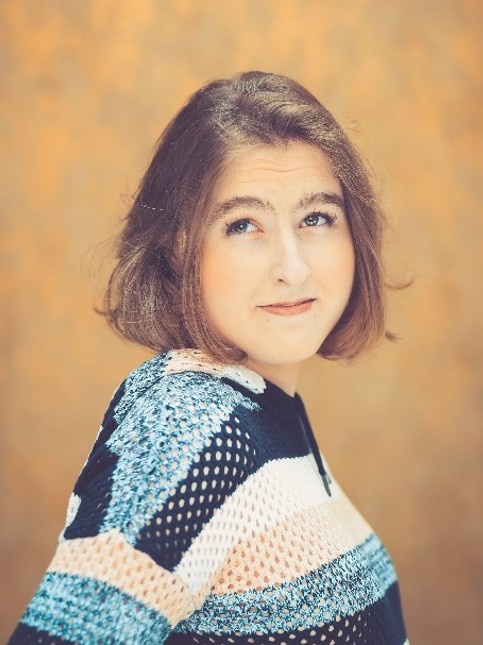
Zsa Zsa (29) was born extremely preterm at 27 weeks of gestation. “My mother developed HELLP syndrome* at 20 weeks of pregnancy, which is the most severe form of pregnancy-related complication you can have.” On top of her extremely preterm birth, she was extremely small. “I was born weighing only 540 grams, a birth weight that was far below average for 27 weeks of gestation and considered extremely growth restricted.”
In the first weeks after birth, she did not have any major complications, except for developing ROP. “Shortly after birth, I underwent laser treatment for ROP. It was performed on both eyes using cryotherapy, and everything went very well.”
“Teachers would assume that if a child wore glasses that thick,
they probably weren’t very intelligent either.”
The road to understanding
As a child, she had to wear thick glasses, given her prescription of minus 16 in both eyes. This was challenging in several ways. “When I was younger, I was bullied a lot because of my eyes.” She also had a long and difficult educational journey. “People consistently underestimated me because my glasses had such thick lenses. Teachers would assume that if a child wore glasses that thick, they probably weren’t very intelligent either. It later turned out I was profoundly gifted.” Mainly self-taught, she worked her way up. “I’ve experienced every level of the Dutch education system.”
She had a planned check-up with an ophthalmologist every six months. “ROP was always mentioned during these appointments, but from my perspective, my parents were never really given a clear explanation of what ROP actually is.” She was around eighteen years old when she started to learn more about ROP. “I started researching it myself, because I find eyes incredibly fascinating. Similarly, I’ve been interested in photography from a young age.” Up until then, everything remained very stable. “My eyes had been doing really well for years, until suddenly they weren’t.”
“One morning I woke up and couldn’t see anything at all with my right eye.
It was completely black.”
Hanging on by a thread
She was 23 years old when scar tissue from ROP contributed to tractional retinal detachments. “One morning I woke up and couldn’t see anything at all with my right eye. It was completely black.” It was the deepest black she had ever experienced. “Normally, even darkness contains some reflected light, but this was such an intense, absolute blackness that I’ll never forget it.” At the hospital, it became clear that this was due to an almost total retinal detachment. “Only a tiny part was still attached; it was hanging on by a thread.”
Nine retinal surgeries were needed to prevent her becoming completely blind. “At the moment, I only have about 10% vision with both eyes combined.” Her sight is blurred due to macular edema, the fluid buildup that developed because of the retinal surgeries. “I also don’t have stereoscopic depth perception, so in many ways I literally see what a camera sees.” Nevertheless, compared to complete blackness, living with blurred vision is something she has learned to accept. “Personally, I don’t even think of it as a disability.”
New perspectives
She dealt with difficult situations by always staying true to herself. “My vision is simply part of who I am. It’s something other people literally can’t see or experience.” She explains that people often assume that she can’t see something. “Meanwhile, I may have noticed it five times faster than they did. I’ve adapted enormously by relying on my hearing. I can safely cross the street without seeing everything, because I’ve already heard where every cyclist, pedestrian, or car is.”
In addition, her retinal surgeon’s support made a big impact on her. “He’s an extraordinary person. Not just because of his medical expertise, but also because he’s genuinely kind.” She can ask him all sorts of questions and have critical discussions. “Being able to have those open conversations, to explore ideas together, and to look ahead to new technologies; that’s incredibly valuable to me.” She finds it very important to improve care for people who go through similar experiences.
“I’m proud that I can make a positive difference for other people
and that I’ve created my own freedom.”
After challenging years at school, she is very grateful for where she is today. “I’m proud of the person I’ve become.” She lives a happy life in her own house together with her husband and two cats. “I’m also proud that I can make a positive difference for other people and that I’ve created my own freedom.” Throughout the years, she found a way to organize her life that works and feels meaningful to her. “I’ve always known that my mind and the way I’m wired are simply different from the average person’s. Having the freedom to live according to that, that’s something I’m incredibly proud of.”
The future of ROP care
Zsa Zsa thinks it would be wonderful if we could improve ways to prevent ROP. “Nutrition, for example, is an area worth studying further.” She explains: “The eye is part of the central nervous system, so why don’t we think about it more like brain tissue? It requires many of the same nutrients that the brain does.” She also highlights an important nuance: “I’m not saying nutrition is the answer to everything, but it can certainly contribute to recovery, especially in the case of nutrient deficiency.”
In addition, she emphasizes the importance of regular check-ups later in life. “The journey doesn’t end after premature birth. I don’t say that to frighten people, but to emphasize how important follow-up care is.” She considers it essential to have regular retinal examinations from doctors with expertise in ROP. “I can’t stress enough how important that is. It really takes a trained eye to recognize the early signs.” If problems do occur, it is important to catch them early.
“We experience so many beautiful things through our vision,
and it’s something incredibly valuable and irreplaceable.”

Zsa Zsa’s own photograph, taken in Switzerland, Brienzersee, taken three days before her first retinal detachment on her left (dominant) eye.
Appreciating our window to life
Zsa Zsa would describe the eyes as ‘the window through which you experience your entire life’. Quite literally, they shape your outlook on the world. She explains that “If this window is covered by mist or condensation, you can’t simply wipe it away.” She really hopes people appreciate and take care of their eyes that way. “We experience so many beautiful things through our vision, and it’s something incredibly valuable and irreplaceable.”
“Raising awareness of ROP is incredibly important to me
because it’s still a condition that receives far too little attention.”
She concludes: “Raising awareness of ROP is incredibly important to me because it’s still a condition that receives far too little attention.” As in her own childhood experience, “many people who have had ROP don’t know that it’s a retinal disease or understand what it can mean in the long term. That’s something I really hope will change.”
About: Zsa Zsa was born extremely preterm 29 years ago. Together with Amber Bontekoe, she runs ‘Stichting Klein Meisje Maakt een Reisje’. This foundation raises awareness about the lifelong consequences of preterm birth by sharing personal experiences, educating healthcare professionals, and advocating for better long-term care.
* HELLP syndrome is a rare but serious pregnancy complication in which the mother’s red blood cells break down, the liver is affected, and the number of blood-clotting platelets becomes dangerously low. It usually develops late in pregnancy or soon after birth, often requires urgent medical treatment, and may lead to preterm birth to protect the health of both the mother and baby.
Reply