
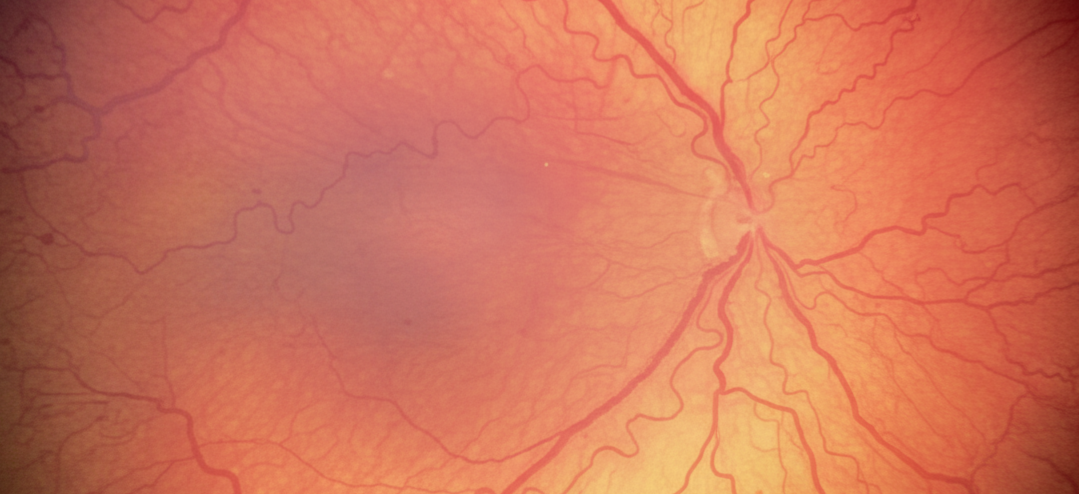
Retinopathy of prematurity (ROP) is an eye disease that affects the immaturely developed retinal vessels, specifically those between the vascularised and non-vascularised retina in the eyes. Premature infants’ eyes are more vulnerable to being affected as they miss the development of blood vessels of the retina that occur during the fourth to ninth months of pregnancy. The likelihood of needing treatment increases with the greater prematurity of the infant.
When an infant is born early, it could develop abnormal blood vessels that grow in the wrong direction, leading to retinal neovascularisation (NV). If they grow too far incorrectly, they pull the retina off the back of the eye and cause retinal detachment1. In severe cases, this leads to blindness, vision loss, or permanent vision impairment.
Population-based registry studies in Europe have shown that approximately 41% of infants born before 32 weeks of gestation have some form of ROP, with 4.8% requiring treatment2. There are five different stages of ROP, ranging from stage 1 to stage 5 (total detachment and blindness). If abnormal blood vessels continue to grow, the infant’s eyes must be treated. Ophthalmologists can treat ROP with laser treatment to burn away the abnormal blood vessels at the edge of the retina. Freezing treatment (cryotherapy) to destroy part of the retina, or an anti-VEGF (Vascular endothelial growth factor) injection to stop unwanted blood vessel growth3.
Even with treatment, ROP can profoundly affect a child’s life. Many infants require frequent ophthalmological exams, which can be stressful or painful. Eye treatments may be effective; however, they can be uncomfortable for the infant and are often described as “tissue burns.” In severe cases, they may be followed by procedures such as vitrectomy or scleral buckling 4.
It is a demanding lifestyle, with continual hospital visits disrupting parents’ daily routines, interrupting bonding, and sometimes becoming a source of chronic physical or psychological burden. Studies following children into middle childhood show that those who had threshold ROP, or even underwent treatment, experience lower health-related quality-of-life scores, affecting vision, personal competence, and causing emotional strain for both children and their families. Prevention aims to spare vulnerable infants and their families from a distressing journey.
Nutritional interventions play a crucial role in preventing ROP. Early enhanced nutrition, with increased amounts of energy, fat, carbohydrates, and protein, may promote normal retinal growth and vascularisation by increasing insulin-like growth factor 1 (IGF-1) levels 5. Parenteral nutrition (PN) is often necessary initially, but prolonged use beyond 14 days has been linked to an increased risk of severe ROP. Fortified mother’s milk (MOM) is the preferred enteral nutrition due to its bioactive factors, antioxidant and anti-inflammatory properties, and protective effect against ROP 6.
Since DHA and ARA are transferred from mother to infant during the third trimester, premature birth causes lower levels of DHA and ARA, which are essential for the healthy development and function of the retina 7. The European Society for Paediatric Gastroenterology, Hepatology and Nutrition (ESPGHAN), recommend providing both DHA and ARA in infant nutrition, especially for preterm infants who miss out on the natural transfer of these fatty acids before birth8.
Retinopathy of prematurity is a significant concern for premature infants, as it can lead to severe vision complications. Early detection and prevention are crucial to prevent severe outcomes and demanding lifestyles. With advances in medical interventions and ongoing research, the understanding of this condition is being enhanced, and outcomes for affected infants can be improved.
Written by Miranda Clifford
- National Eye Institute. “Retinopathy of Prematurity | National Eye Institute.” Www.nei.nih.gov, 10 July 2019, www.nei.nih.gov/learn-about-eye-health/eye-conditions-and-diseases/retinopathy-prematurity.
- Blazon, M. N., Rezar-Dreindl, S., Wassermann, L., Neumayer, T., Berger, A., & Stifter, E. (2024). Retinopathy of Prematurity: Incidence, Risk Factors, and Treatment Outcomes in a Tertiary Care Center. Journal of Clinical Medicine, 13(22), 6926. https://doi.org/10.3390/jcm13226926
- Turbert, David. “What Is Retinopathy of Prematurity (ROP)?” American Academy of Ophthalmology, American Academy of Ophthalmology, 30 Sept. 2024, www.aao.org/eye-health/diseases/what-is-retinopathy-prematurity.
- Kaur K, Mikes BA. Retinopathy of Prematurity. [Updated 2025 Jun 2]. In: StatPearls [Internet]. Treasure Island (FL): StatPearls Publishing; 2025 Jan-. Available from: https://www.ncbi.nlm.nih.gov/books/NBK562319/
- Athikarisamy S, Desai S, Patole S, Rao S, Simmer K, Lam GC. The Use of Postnatal Weight Gain Algorithms to Predict Severe or Type 1 Retinopathy of Prematurity: A Systematic Review and Meta-analysis. JAMA Netw Open. 2021;4(11):e2135879. doi:10.1001/jamanetworkopen.2021.35879
- Hellström A, Kermorvant-Duchemin E, Johnson M, Sáenz de Pipaón M, Smith LE, Hård AL; ESPR Nutrition council members. Nutritional interventions to prevent retinopathy of prematurity. Pediatr Res. 2024 Sep;96(4):905-911. doi: 10.1038/s41390-024-03208-1. Epub 2024 Apr 29. PMID: 38684884; PMCID: PMC11502481.
- Hellström A, Nilsson AK, Wackernagel D, et al. Effect of Enteral Lipid Supplement on Severe Retinopathy of Prematurity: A Randomized Clinical Trial. JAMA Pediatr. 2021;175(4):359–367. doi:10.1001/jamapediatrics.2020.5653
- Lapillonne, Alexandre, et al. “Enteral Nutrition in Preterm Infants: A Position Paper from the ESPGHAN Committee on Nutrition and Invited Experts.” Journal of Pediatric Gastroenterology and Nutrition, vol. 74, no. 3, Mar. 2022, pp. 469–498. www.jpgn.org/article/S0146-6649(22)00099-9/fulltext. Accessed 9 Oct. 2025.
Reply